
Yes, creaky floors can almost always be fixed—the sound is just wood rubbing against wood, nails, or the subfloor. Most creaking is cosmetic, not structural, caused by subfloor gaps, loose nails, or humidity fluctuations common in Central Texas. The real question isn’t whether it can be fixed, but identifying what’s causing it. We find Austin homeowners get the best results when they check for basement or crawl space access first—that determines whether it’s a DIY fix or needs professional attention.
Quick Facts:
- Common Causes: Subfloor gaps, backing-out nails, humidity changes, joist problems—most are normal settling, not structural failure
- DIY Options: Shimming gaps, adding screws from below, lubricating squeaky boards—works well with basement access
- Professional Signs: New, sudden creaking, visible floor bounce, patterns near load-bearing walls, or signs of water damage
- Texas Factor: Our humid summers and dry winters, with heaters running, create constant hardwood expansion cycles
- Experience: Family-owned Austin flooring experts with honest damage assessments
Top 4 Causes of Floor Creaking:
- Subfloor Gaps – Most common culprit; subfloor separates from joists over time, flexes when stepped on
- Loose Nails – Nails work their way up over decades, rubbing against wood fibers with each step
- Humidity Fluctuations – Wood expands and contracts with Central Texas seasonal changes, creating gaps
- Joist Problems – Less common but more serious; undersized or damaged joists cause widespread creaking and bouncing
Ready to Choose? Contact Soleil Floors for a professional evaluation of whether your creak is cosmetic or structural.
Yes, creaky floors can almost always be fixed. The sound you’re hearing is usually wood rubbing against wood, nails, or the subfloor—and once you identify what’s causing it, the solution is often straightforward. Sometimes it’s a quick DIY fix with some lubricant or screws. Other times, especially with older homes or foundation concerns, you’ll want a professional to take a look.
The real question isn’t whether creaky floors can be fixed—it’s figuring out why they’re creaking in the first place.
Table of Contents
What Actually Causes Floors to Creak?
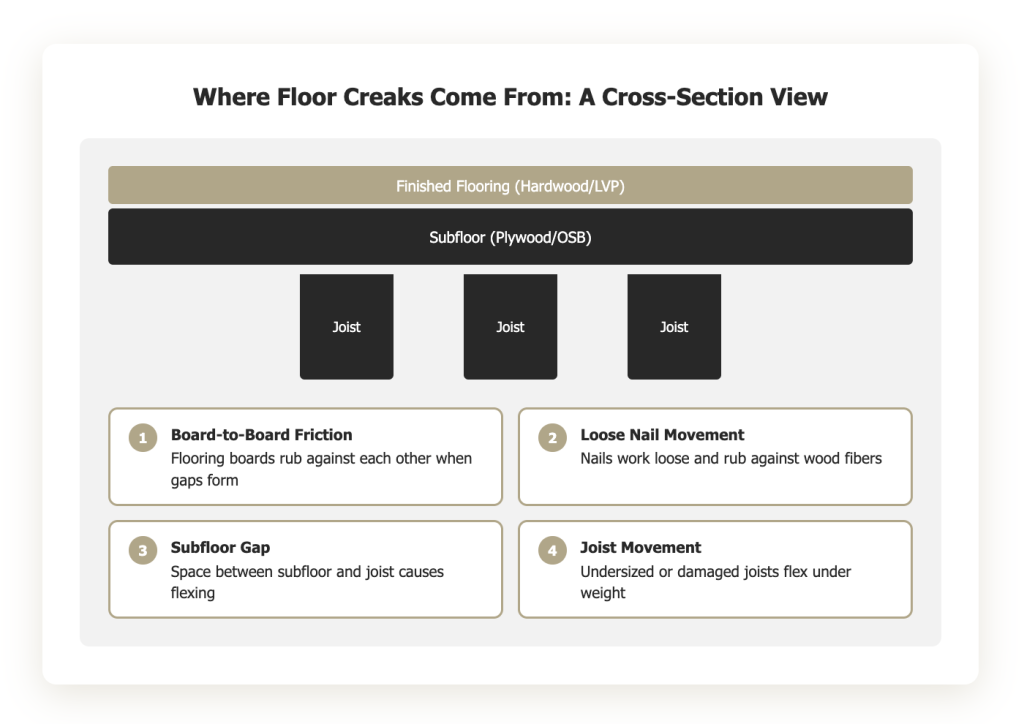
Floor creaking happens when something moves that shouldn’t. Here’s what’s typically going on underneath your feet:
Subfloor gaps are the most common culprit. Over time, the subfloor can separate slightly from the joists below, creating a small gap. When you step on that spot, the subfloor flexes down, hits the joist, and makes that annoying squeak.
Loose or backing-out nails create friction points. As nails work their way up over years of use, they rub against wood fibers every time there’s movement. This is especially common in homes with original hardwood flooring that’s been through decades of seasonal changes.
Humidity fluctuations cause wood to expand and contract. In Central Texas, we deal with this constantly—humid summers followed by dry winters with the heater running. This cycle puts stress on hardwood flooring and can create gaps between boards or between the flooring and subfloor.
Joist problems are less common but more serious. If joists are undersized, spaced too far apart, or have developed structural issues, they can flex under load and cause widespread creaking.
Is Floor Creaking a Sign of a Bigger Problem?
This is a question we get asked often. The short answer: usually not, but sometimes yes.
Most creaking is cosmetic—annoying but not dangerous. If your floors have creaked for years and nothing has changed, you’re probably dealing with normal wood movement and settling.
However, certain signs suggest you should investigate further:
- A new creaking sound appeared suddenly. If floors that were quiet for years suddenly start making noise, something changed. Could be moisture damage, it could be settling, or it could be a pest issue affecting the subfloor.
- Creaking accompanied by visible floor movement. If you can see the floor flexing significantly when you walk, that’s different from hearing a squeak. Excessive bounce indicates potential structural concerns.
- Creaking near load-bearing walls or in specific patterns. Concentrated creaking in certain areas, especially near walls or in straight lines, might indicate joist or beam issues.
- Signs of water damage. Discoloration, soft spots, or musty smells combined with creaking could mean moisture problems that need attention before any floor repair.
When in doubt, having a professional assess the situation makes sense. Catching foundation or structural issues early is always less expensive than waiting.
Can I Fix Creaky Floors Myself?
Technically, yes; however, the success of DIY fixes depends entirely on what’s causing the creak and whether you can access the area from below.
If you have basement or crawl space access, your options are much better:
- Shimming gaps works well for isolated squeaks. Slide a thin wooden shim coated with carpenter’s glue into the gap between the joist and subfloor. Don’t force it—you just want to fill the void, not lift the subfloor.
- Adding screws from below is more permanent. Drive a short screw up through the subfloor into the flooring above, pulling everything tight. The key is using screws short enough that they won’t poke through your finished floor.
- Installing blocking between joists helps with widespread flexing. Cut 2x lumber to fit snugly between joists and secure it where you’re experiencing movement.
If you can only access from above, things get trickier:
- Specialized squeak-repair kits like Counter-Snap or Squeeeeek-No-More let you drive screws through carpet or hardwood, then snap off the screw heads below the surface. They work, but require careful execution.
- Lubricating the squeak provides temporary relief. For hardwood floors, work powdered graphite, talcum powder, or even powdered soapstone into the seams between boards. This reduces friction but doesn’t address the underlying cause.
Renailing or screwing through the face is effective but visible. If you don’t mind small filled holes or your floor needs refinishing anyway, driving ring-shank nails or trim screws into the subfloor below can quiet things down.

When Should I Call a Professional for Creaky Floors?
There’s not a right or wrong answer here—it depends on the scope of the problem and your comfort level.
Call a professional when:
The creaking is widespread. If half your house squeaks, systematically fixing each spot from below isn’t practical. A flooring contractor can assess whether refinishing with proper re-securing makes more sense than spot repairs.
You suspect structural issues. According to the National Wood Flooring Association, excessive floor movement often traces back to subfloor or joist problems that require proper diagnosis. Foundation settling, inadequate joist sizing, or moisture-damaged framing aren’t DIY territory.
The floor needs other work anyway. If you’re planning to refinish hardwood or considering new flooring installation, addressing creaks during that process is more efficient than fixing them separately.
You can’t identify the source. Sometimes creaks seem to move around, or you just can’t pinpoint what’s rubbing against what. Professional experience matters here.
A reputable contractor will tell you honestly whether the fix is simple or complex—and whether you’re looking at a repair bill or something more significant.
Does Texas Weather Make Floor Creaking Worse?
Absolutely. Our humidity swings here in Central Texas put extra stress on wood flooring.
Care guidelines recommend maintaining indoor humidity between 35-55% for hardwood stability. The NWFA suggests a similar range of 30-50% relative humidity with temperatures between 60-80°F.
In summer, when humidity soars, wood absorbs moisture and expands. In winter, when we’re running heaters that dry out indoor air, wood contracts. This constant cycle can:
- Create gaps between floorboards that fill with debris, then creak when boards try to expand again
- Cause cupping or crowning that changes how boards interact with each other
- Work fasteners loosen over time as wood repeatedly moves around them
Practical solutions:
- Use a humidifier in winter when your heating system is running. Aim for that 35-50% range.
- Run AC or a dehumidifier in summer during our most humid months. Your floors and your comfort will both benefit.
- Keep the temperature relatively consistent. Dramatic swings stress wood more than steady conditions.
Many Central Texas homes sit on concrete slabs, which adds another wrinkle. Concrete can transmit moisture from the soil, affecting flooring from below, even when your indoor humidity seems fine. This is one reason engineered hardwood often performs better than solid hardwood over slabs—the layered construction handles moisture-related movement more gracefully.

How Much Does It Cost to Fix Creaky Floors?
Costs vary dramatically based on what’s causing the problem:
Fix Type | Typical Cost Range | Best For |
DIY lubricant/powder | $5-15 | Minor squeaks in accessible areas |
DIY shims and screws | $20-50 | Isolated creaks with basement access |
Squeak-repair kit (Counter-Snap) | $20-40 | Carpeted or finished floors, DIY approach |
Professional spot repairs | $100-300 | Multiple squeaks, no basement access |
Subfloor repair/replacement | $500-2,000+ | Widespread issues, water damage |
Full floor re-securing during refinish | Included in refinish cost | Floors needing refinishing anyway |
Structural/joist repairs | $1,000-5,000+ | Bouncy floors, foundation issues |
For context, if you’re considering replacing flooring entirely rather than repairing, that’s a different cost conversation—but sometimes it makes more sense than investing heavily in fixing old subfloor problems underneath flooring that’s near the end of its lifespan anyway.
Will Creaky Floors Affect My Home’s Value?
Minor creaking rarely concerns buyers—older homes creak, and most people understand that. Well-maintained hardwood remains one of the most desirable features for homebuyers, regardless of minor imperfections.
However, creaking that suggests structural problems is different. If a home inspector notes excessive floor movement or recommends further evaluation, that can become a negotiating point or even a deal-breaker for some buyers.
If you’re thinking about selling and your floors creak significantly, having them assessed beforehand makes sense. Fixing the problem—or at least understanding what’s causing it—puts you in a better negotiating position than discovering issues during the buyer’s inspection.
Frequently Asked Questions
Creaks happen where something is loose or rubbing. A creak in one spot usually means that specific area has a gap between the subfloor and joist, a loose nail, or boards that have separated slightly. The rest of your floor might be fastened securely.
Not usually. Most creaking comes from normal wood movement and settling, not foundation problems. However, if creaking appears suddenly, is accompanied by visible floor movement, or you notice cracks in walls near the creaky areas, having the foundation checked is reasonable.
Yes. Specialized kits like Squeeeeek-No-More are designed for this—they let you drive a screw through the carpet into the subfloor, then snap off the head below the carpet surface. The carpet fibers hide the repair.
Sometimes. If the floor needs to be re-nailed or re-secured as part of the refinishing process, that can address many squeaks. However, refinishing the surface alone—sanding and applying a new finish—won’t fix creaks caused by subfloor gaps or loose joists.
Properly executed repairs are permanent. If you shim a gap correctly or drive screws into the right spots, those fixes don’t need to be redone. Temporary fixes like lubricating with powder may need reapplication every few months to a year.
Yes, sometimes. New flooring can develop squeaks as it acclimates to your home’s humidity and temperature conditions. This is especially common in the first year. Many minor squeaks settle down on their own; persistent ones may need attention from your installer.
It depends on the cause. Squeaks from installation issues may be covered under the installer’s workmanship warranty. Squeaks from normal wood movement, humidity changes, or subfloor problems typically aren’t covered under flooring manufacturer warranties.
Not necessarily. Some creaking in older homes is normal and expected. Worry if the creaking is new, getting worse, or accompanied by other signs like visible movement, bouncing, or structural concerns elsewhere in the house.