
It depends on your floor’s current condition and local market—there’s no right or wrong answer here. If flooring is visibly damaged or heavily dated (think 1990s orange-toned oak or stained carpet), replacing it typically returns 70-80% of your investment while helping homes sell faster. But if floors are functional and neutral, you might be better off pricing accordingly or offering a flooring allowance. We find Austin homeowners avoid expensive mistakes when they focus on condition first, style second.
Quick Facts:
- ROI Range: Hardwood returns 70-80%, LVP 50-70%, tile 60-75%, carpet only 25-40%—but context matters more than averages
- Replace When: Visible stains, pet odors, water damage, dated 1990s styling, or cracked/missing tile
- Skip When: Floors are functional and neutral, the market is hot, or buyers can work with what’s there
- Math Reality: $3,000 carpet replacement might prevent $10,000 in price negotiations—different calculation than upgrading functional floors
- Experience: Family-owned Austin flooring experts with honest resale advice
Top 5 Flooring Issues That Hurt Home Sales:
- Pet Damage – Stained, odorous carpet is a dealbreaker; buyers mentally deduct repair costs (often overestimating)
- Water Damage – Warped hardwood or discolored areas signal bigger problems to buyers
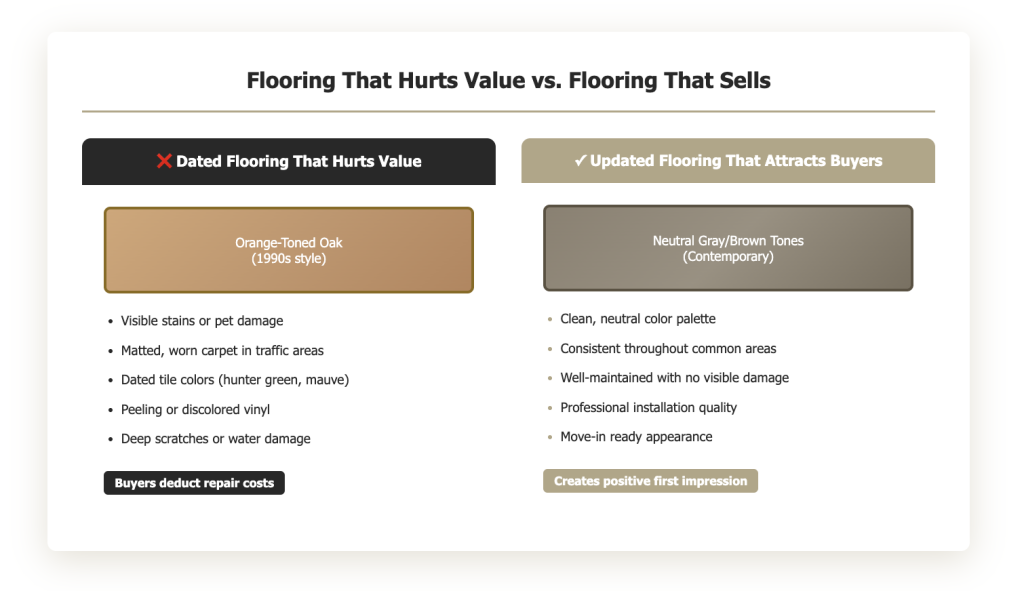
- Dated Styling – Orange oak, hunter green tile, mauve accents scream “1990s” and date the entire home
- Mismatched Flooring – Too many different materials create visual chaos; consider combining flooring types strategically
- Worn Traffic Areas – Hardwood with missing finish in main paths looks neglected, even if structurally fine
Ready to Choose? Contact Soleil Floors for honest advice on whether replacement or allowance makes more sense for your sale.
It depends on your floor’s current condition and your local market. If your flooring is visibly damaged, heavily dated, or turning off buyers during showings, replacing it usually makes financial sense. But if your floors are in decent shape—even if they’re not your style—you might be better off pricing accordingly or offering a flooring allowance instead.
The real question isn’t just “should I replace it” but “will I get my money back?”
Table of Contents
What’s the ROI on New Flooring When Selling?
Here’s the honest answer: flooring replacement typically returns 70-80% of your investment at resale. That’s a solid return for a home improvement project, but it’s not dollar-for-dollar.
According to industry data and real estate professionals, different flooring types perform differently:
Flooring Type | Typical ROI | Notes |
Hardwood (new or refinished) | 70-80% | Highest buyer appeal, especially in living areas |
Luxury Vinyl Plank (LVP) | 50-70% | Growing acceptance, practical for families |
Laminate | 40-60% | Budget-friendly but perceived as “cheap” by some buyers |
New Carpet | 25-40% | Lowest ROI, but damaged carpet is a dealbreaker |
Tile (kitchens/baths) | 60-75% | Expected in wet areas, adds perceived value |
The numbers tell part of the story, but context matters more. Replacing $3,000 worth of damaged, stained carpet with new carpet might help you sell faster and avoid price negotiations that would cost you $10,000. That’s a different calculation than upgrading perfectly functional flooring just because you think buyers might prefer something else.
When Does Replacing Flooring Make Sense Before Selling?
Replace when the condition creates a negative first impression:
- Carpet that’s visibly stained, matted, or smells like pets
- Hardwood with deep scratches, water damage, or missing finish in traffic areas
- Tile with cracked or missing pieces, especially in entryways or bathrooms
- Vinyl that’s peeling, discolored, or obviously outdated
These aren’t style issues—they’re condition issues. Buyers see damaged flooring and mentally deduct repair costs from their offer, often overestimating what repairs would actually cost.
Replace when your flooring screams “1990s”:
- Orange-toned oak that was everywhere 25 years ago
- Builder-grade carpet in colors nobody chooses anymore
- Vinyl sheet flooring with patterns that date the home
- Ceramic tile in dated colors (hunter green, mauve, brass accents)
According to the National Wood Flooring Association, hardwood flooring remains the single most-requested feature among homebuyers. But even hardwood can work against you if it looks tired or dated. Refinishing existing hardwood with a contemporary stain color often makes more sense than full replacement—and costs significantly less.
When Should You NOT Replace Flooring Before Selling?
Don’t replace flooring that’s functional and neutral:
If your floors are in reasonable condition and a relatively neutral style, buyers can work with that. Beige carpet that’s clean? Leave it. Oak hardwood that’s not orange-toned? Probably fine. Tile that’s dated but not damaged? Consider leaving it.
Don’t go high-end in a mid-range home:
Installing premium hardwood in a starter home doesn’t make financial sense. Buyers in that price range aren’t expecting—or willing to pay for—luxury materials. Match your flooring investment to your home’s price point and neighborhood expectations.
Don’t assume your taste matches buyers’ taste:
This is where homeowners often get tripped up. You might think gray LVP is more appealing than your current tan carpet—and you might be right—but that’s a style preference, not a condition issue. If the carpet is functional, you’re gambling that your style choice matches what buyers want.
Consider a flooring allowance instead:
Rather than replacing flooring yourself, you can offer buyers a credit at closing to handle flooring after purchase. This lets buyers choose exactly what they want and eliminates the risk of you spending money on something they’ll tear out anyway. Many real estate agents recommend this approach for homes with dated-but-functional flooring.
Which Rooms Matter Most for Flooring When Selling?
Not all flooring carries equal weight with buyers. If budget forces you to prioritize, focus here:
Highest impact:
- Living room/great room — This is often the first large space buyers see after the entryway. First impressions happen here.
- Kitchen — Buyers scrutinize kitchens closely. Damaged or dated flooring undermines the whole room.
- Entryway/foyer — Sets the tone for the entire showing. Dirty, damaged, or dated flooring here starts the tour on the wrong foot.
- Master bedroom — Buyers spend time imagining themselves in this space. Stained carpet or squeaky floors distract from that vision.
Lower priority:
- Secondary bedrooms (clean carpet is usually acceptable)
- Home offices (functional matters more than impressive)
- Utility rooms and laundry (functional expectations)
If you can only afford to address one or two rooms, living areas and kitchens give you the most bang for your buck.

Get a written estimate from Soleil Floors — no pressure, no surprises, just an honest number for your home.
Get a Free Estimate →What Flooring Do Buyers Actually Want?
This shifts with trends, but some preferences have staying power:
Hardwood remains king. Real estate surveys consistently show hardwood as the most desired flooring feature. It’s associated with quality, warmth, and value. If you have hardwood under carpet, uncovering and refinishing it almost always makes sense.
Neutral colors win. This isn’t the time to express your design personality. Gray tones, natural wood colors, and warm beiges photograph well and appeal to the widest range of buyers. Current flooring trends lean toward lighter, cooler tones—but classic medium browns remain safe choices.
LVP has gained acceptance. Luxury vinyl plank used to be seen as a cheap alternative. Now, with improved visuals and waterproof performance, many buyers view quality LVP positively—especially in homes with active families or pets in mind.
Carpet expectations vary by room. Carpet in bedrooms remains acceptable and even preferred by some buyers for comfort and warmth. Carpet in living areas, kitchens, or bathrooms, however, can be a turn-off.
Consistency matters. Buyers respond well to cohesive flooring throughout common areas. Too many flooring transitions—LVP in the living room, tile in the kitchen, carpet in the hallway—can make a home feel choppy. If you’re updating, consider how different flooring types will work together.
How Do I Know If My Floors Are Hurting My Sale?
Ask your real estate agent directly. Experienced agents see hundreds of homes and know what makes buyers hesitate. If your agent suggests flooring updates, take that feedback seriously—they’re not trying to spend your money, they’re trying to help you sell.
Watch buyer behavior during showings. If feedback consistently mentions flooring—even indirectly with comments like “needs some updating” or “we’d have to replace the carpet”—that’s a signal.
Compare to competing listings. Look at similar homes in your price range. If they all have updated flooring and yours doesn’t, you’re at a competitive disadvantage.
Check the common mistakes homeowners make when updating flooring. Choosing the wrong style, skimping on installation quality, or selecting materials that don’t match your home’s market position can undermine your investment.

What About the Cost vs. Price Reduction Math?
Here’s how to think about this practically:
Let’s say replacing worn carpet throughout common areas costs $4,000. If your home sits on the market and you eventually accept an offer $8,000-10,000 below asking because of buyer concerns about the flooring condition, you would have been better off making the investment upfront.
But here’s the flip side: if that same carpet is just dated (not damaged) and buyers would accept a $3,000 flooring allowance at closing, spending $4,000 to replace it yourself nets you a loss.
The decision tree looks like this:
- Is the flooring damaged or just dated? Damaged usually warrants replacement; dated might not.
- How competitive is your market? In a seller’s market, you have more flexibility. In a buyer’s market, every advantage matters.
- What’s your timeline? If you need to sell quickly, updated flooring helps. If you can wait for the right buyer, allowances work.
- What are comparable homes offering? If competing listings all have updated flooring, you may need to match them.
Professionally installed flooring adds perceived value beyond the material itself—buyers associate quality installation with overall home care and maintenance.
Should I DIY Flooring Installation Before Selling?
We’d generally say no, with some exceptions.
Why professional installation matters for resale:
- Buyers and home inspectors notice installation quality. Gaps, uneven transitions, and poor trim work raise questions about what other shortcuts might exist in the home.
- Many flooring warranties require professional installation, which matters if buyers ask about warranty coverage.
- Poor installation can cause problems during the inspection, creating negotiating points or repair requests.
When DIY might be acceptable:
- If you have genuine flooring installation experience (not just “I watched some YouTube videos”)
- For very small areas like a single bathroom
- If you’re selling to investors or flippers who plan to renovate anyway
For most homeowners preparing to sell, the modest savings from DIY installation aren’t worth the risk of creating new problems or raising buyer concerns.
Frequently Asked Questions
Generally yes. Homes with updated, move-in-ready flooring tend to spend less time on the market than homes that need obvious work. Buyers prefer homes where they can move in without immediate projects.
Hardwood flooring consistently delivers the strongest resale value, followed by quality tile in appropriate areas. Luxury vinyl plank has gained ground in recent years due to its durability and waterproof properties.
It depends on how old and what style. If the carpet is functional, neutral, and doesn’t smell, a professional cleaning might be sufficient. If it’s visibly dated, matted in traffic areas, or an unusual color, replacement typically makes sense.
Almost always yes. Refinishing costs significantly less than replacement and can dramatically improve appearance. Hardwood that’s been refinished with a contemporary stain color appeals strongly to buyers.
As a guideline, spend 1-2% of your home’s value on pre-sale flooring updates. For a $400,000 home, that’s $4,000-8,000. Focus on areas with the biggest buyer impact rather than trying to update everything.
Neutral tones—medium browns, grays, and warm beiges—appeal to the widest range of buyers. Avoid very dark floors (show everything), very light floors (maintenance concerns), or unusual colors that limit buyer appeal.
A flooring allowance makes sense when your floors are dated but functional, when your timeline allows for negotiation, or when you’re unsure what style buyers in your market prefer. It lets buyers choose their own flooring while giving you credit for addressing the issue.